1

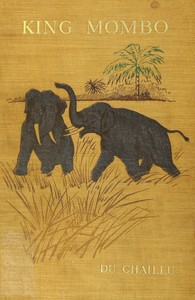
King Mombo — Inside the Classic
4
1
Project Gutenberg
2020
Animals -- Juvenile literature; Voyages and travels -- Juvenile literature; Kings and rulers -- Juvenile literature; Adventure and adventurers -- Juvenile literature; Africa -- Description and travel -- Juvenile literature; Du Chaillu, Paul B. (Paul Belloni), 1835-1903 -- Travel -- Juvenile literature; Hunting -- Juvenile literature
Readers of public-domain and historical texts
Project Gutenberg digital edition
en
Edition facts
Words: 54,290
Reading time: 237 min
Text sections: 32
Source:
Project Gutenberg record #62710
Paul Du Chaillu's 'King Mombo' recounts his travels in equatorial Africa, focusing on encounters with the titular king and local wildlife. The narrative moves from sea voyage to forest village, blending ethnographic observation with hunting episodes. Recurring motifs include the ngina (gorilla), witchcraft accusations, and the interplay of European technology and African belief.
Editorial Edition Score
4.9/5
★★★★★
★★★★★
Calculated from edition completeness, EPUB availability, text structure and catalogue metadata. Not a user rating.
Edition quality
The book opens not in Africa but at sea, with a detailed account of a schooner voyage from New York. Du Chaillu devotes five chapters to the journey, describing storms, a swordfish-whale fight, and the Sargasso Sea, before landfall. This gradual approach establishes a pattern: the narrative moves deliberately from the familiar to the unfamiliar, preparing the reader for the interior. The structure itself becomes a kind of travel, with each chapter a stage.
From Deck to Village
The voyage chapters serve more than scene-setting. They introduce a rhythm of observation and incident that continues ashore. The storm, the calm, the sighting of new stars—each is rendered with the same patient specificity Du Chaillu later applies to a gorilla hunt or a village ceremony. When he finally reaches King Mombo’s village in Chapter VI, the reader has already been trained to attend to detail. The transition from sea to land is marked by a shift in scale: the vast ocean gives way to the dense forest, but the narrative eye remains constant.
The King and His Fears
King Mombo is introduced through his anxieties. He fears witchcraft, consults idols, and relies on a medicine man to identify supposed sorcerers, who are then sold as slaves. Du Chaillu presents these episodes without overt judgment, letting the king’s actions speak. The narrator’s own role is ambiguous: he gives presents, demonstrates a clock and magnet, and is called “Oguizi” (spirit). The power dynamic is never simple. Mombo’s fear of witchcraft is not mere superstition but a political tool, and Du Chaillu’s presence becomes part of that calculus.
The Ngina: A Portrait of the Gorilla
The most sustained passage in the excerpts is the hunter Oshoria’s description of the ngina (gorilla). It is a remarkable piece of natural history embedded in dialogue. Oshoria details the animal’s diet, strength, and behavior: it eats constantly, can bend a gun barrel, and its hair stands erect when angry. He notes that the ngina has the same number of bones as a human, and that its teeth develop like a child’s. The description is both precise and dramatic, culminating in the image of the gorilla beating its chest. Du Chaillu lets Oshoria speak at length, preserving the oral quality of the account.
Objects of Wonder
Throughout the narrative, European objects provoke native wonder. A Waterbury clock, a magnet, matches, and a music-box are each met with astonishment. These scenes are reciprocal: they reveal both the unfamiliarity of the technology and the assumptions of the narrator. Du Chaillu does not dwell on the irony, but the pattern is clear. The same curiosity that drives his own exploration is mirrored in the villagers’ reactions. The objects become a silent commentary on the encounter between worlds, a motif that runs beneath the surface of the hunting and travel anecdotes.
Readers should attend to the book’s layered structure: the voyage, the village, the hunt, and the return. Du Chaillu’s voice is that of a naturalist and a storyteller, but his narrative is also shaped by the people he meets. The long speeches of Oshoria and others are not decoration; they are the book’s core. To read King Mombo is to watch a traveler learn to listen.
Reader reflection
Take a moment to reflect on this book
Create a short personal record of your experience with this book.
Your progress
0
/
10
2
What was your overall reaction to the book?
3
Would you recommend this book to another reader?
4
How much effort did this book require?
5
How personally connected did you feel to the book?
6
How clear did the writing feel?
7
Did anything about the book feel genuinely new?
8
Could you apply anything you learned?
9
Which lesson or insight stayed with you?
10