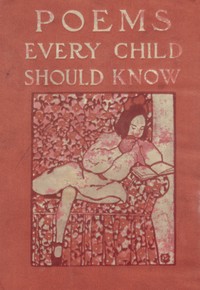
Poems Every Child Should Know by Mary E. Burt
Let's be clear: this isn't a novel. There's no plot in the traditional sense. Poems Every Child Should Know is exactly what the title promises—a curated anthology. Edited by Mary E. Burt and originally published in 1904, it collects over 150 poems she believed were essential for young minds. The book is organized somewhat by theme and difficulty, starting with simpler, rhythmic pieces for younger children and progressing to more complex narratives and lyrics.
The Story
There isn't a storyline, but there is a journey. You open the book and might find yourself reciting "Twinkle, Twinkle, Little Star" or "The Owl and the Pussy-Cat." As you turn the pages, the journey deepens. You encounter dramatic historical tales like "The Charge of the Light Brigade," the gentle wisdom of Wordsworth's "To a Child," and the haunting beauty of Poe's "The Bells." It's a tour through the poetic landscape that early 20th-century educators deemed fundamental. The 'story' is the cumulative effect of moving from playful nonsense to profound reflection, all through the lens of what was once considered classic children's verse.
Why You Should Read It
Reading this collection today is a unique experience. It's partly a poetry book and partly a historical document. You get to see what virtues and ideas (patriotism, nature reverence, moral lessons) were prized enough to teach to kids. Some poems feel timeless; others will make you think, "They gave this to children?" (Looking at you, grim ballad of "Lucy Gray"). But that's what makes it so engaging. It starts conversations—with your own childhood, with your kids, or about how our cultural touchstones change. The language is rich and musical, a world away from today's often casual prose. It's a reminder of the power of memorization and recitation, of having beautiful words stuck in your head.
Final Verdict
This book is perfect for parents and teachers looking for "the classics" beyond nursery rhymes, for poetry lovers interested in literary history, and for anyone feeling nostalgic for a slower, more lyrical pace of learning. It's not a modern, diverse anthology (it very much reflects its time), but that's precisely its value. Think of it less as a definitive list for today's child and more as a shared inheritance from yesterday's children. Dip into it, read a poem aloud, and feel that connection across the years. It's a quiet, powerful little time machine made of paper and rhyme.
Legal analysis indicates this work is in the public domain. Knowledge should be free and accessible.